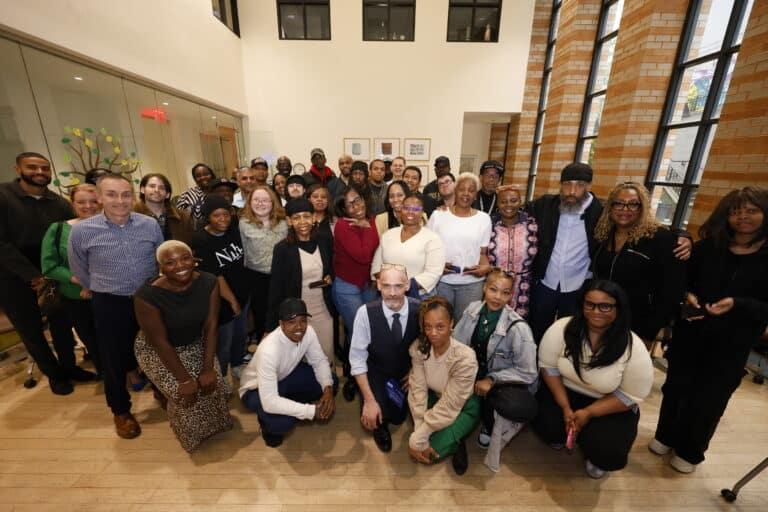
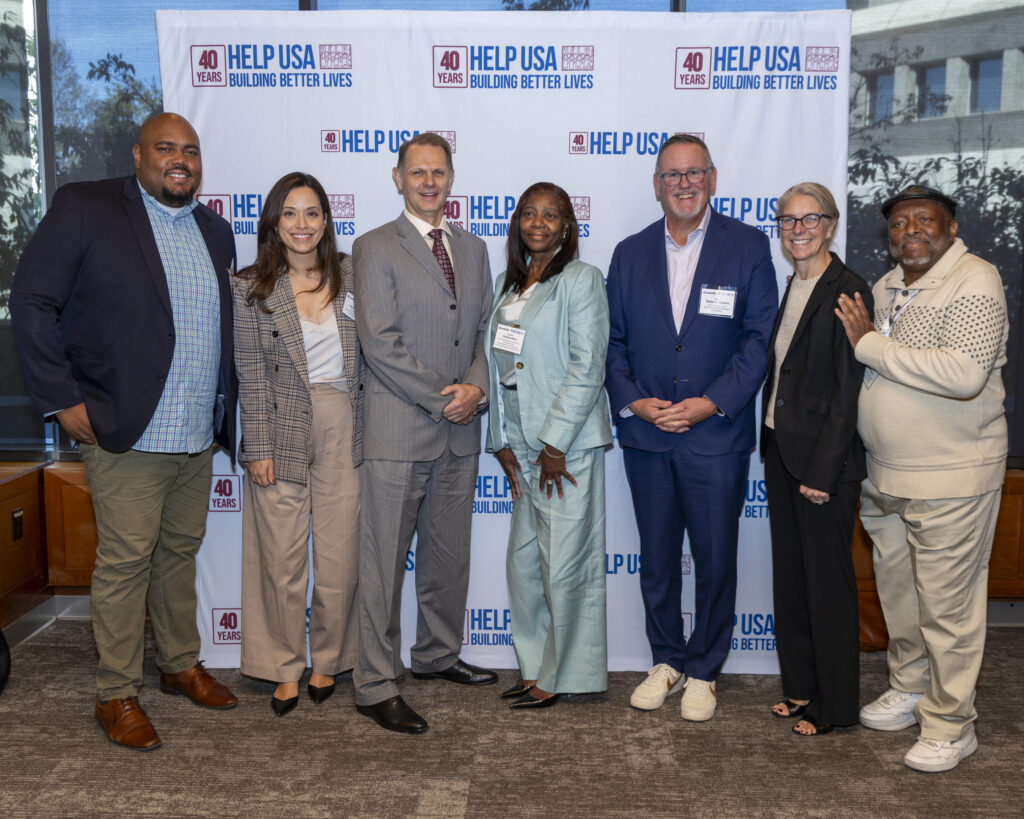
NEW YORK, NY – HELP USA convened housing policymakers, service providers, researchers, and advocates on October 21 at the Museum of Jewish Heritage for Upstream Symposium 2026: Frontline Solutions to Homelessness, a day of discussions examining how New York City can move from a right-to-shelter framework toward a coordinated right-to-housing approach.
The symposium explored the policy, funding, and operational changes needed to better connect homelessness prevention, emergency shelter, supportive services, and permanent housing. Speakers drew on local, national, and international experiences to examine how New York City can build on its longstanding commitment to shelter while helping more people obtain and maintain stable housing.
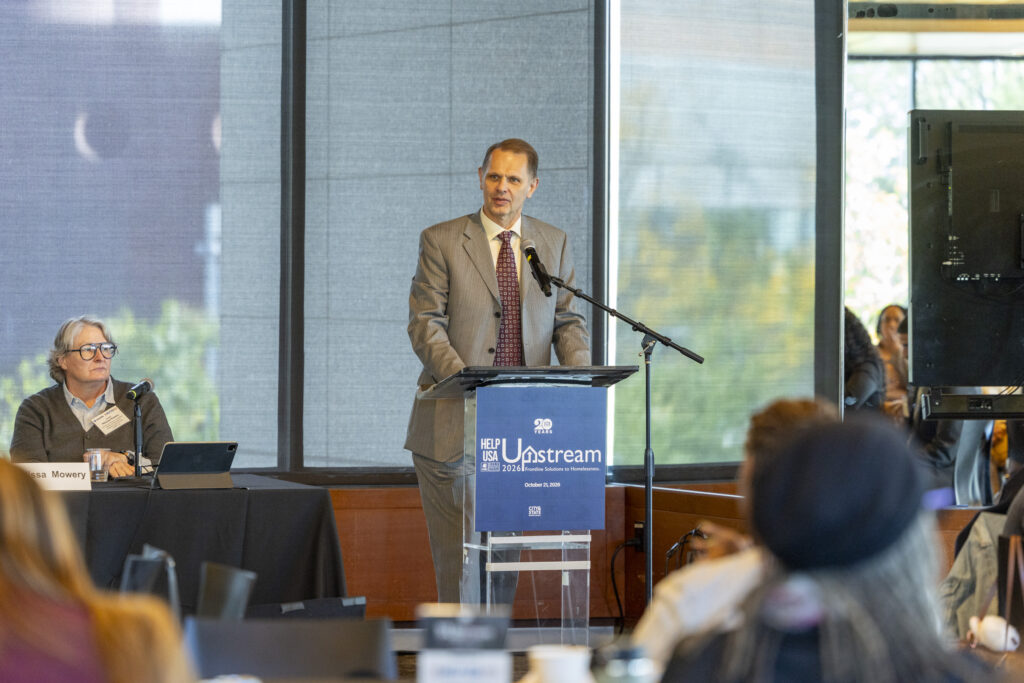
In his opening remarks, Dan Lehman, President and CEO of HELP USA, acknowledged the scale of New York City’s homelessness response and challenged participants to consider how existing resources could achieve better long-term outcomes.
“We’re far from the only place in the US experiencing the twin crises of homelessness and housing affordability, but we are like no other place in the commitment we have made to sheltering people who are experiencing homelessness and getting them back to stable housing,” Lehman said. “Our task is to harness all that experience, all that dedication, all that ingenuity and all that money to make mass homelessness a thing of the past and a home for every New Yorker a reality.”
Learning from International Housing Approaches
The opening plenary, Housing as the Goal: Moving Beyond a Shelter-First Response, examined what New York City can learn from housing-focused approaches in other parts of the world, particularly Finland’s efforts to reduce homelessness through permanent housing.
Joining virtually from Finland, Juha Kahila, Head of International Affairs at Y-Säätiö, discussed the country’s Housing First approach, including its conversion of shelters and temporary accommodations into permanent homes with on-site support.
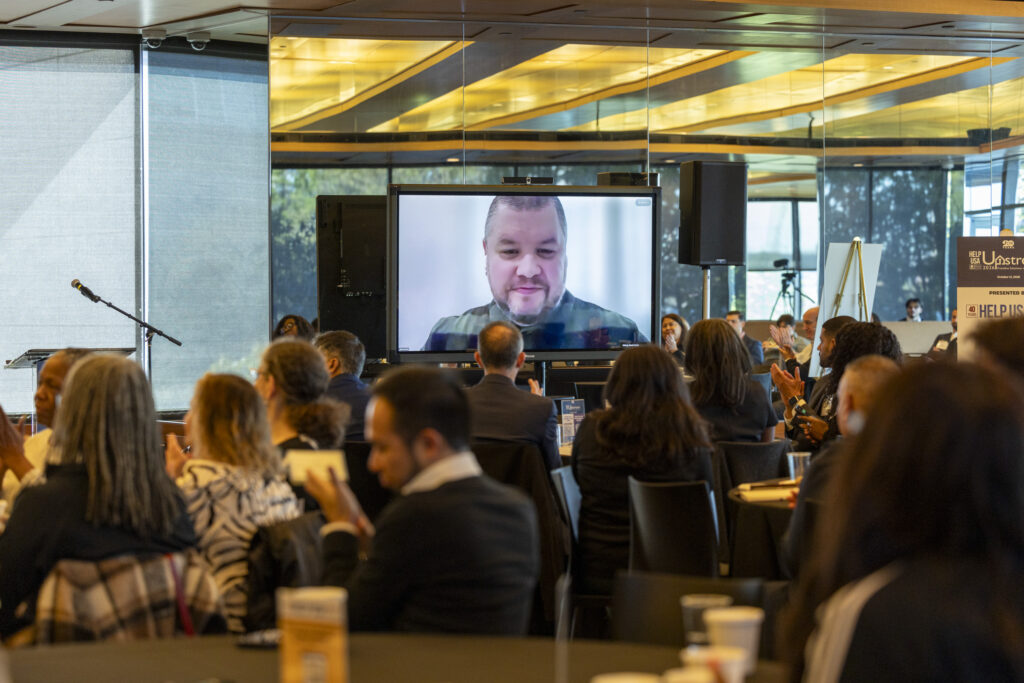
“We need to be bold enough to think outside of the box when it comes to housing solutions, for example, because we have always believed that one size housing does not fit for all. We need to have different housing solutions because people have different kind of needs,” Kahila said.
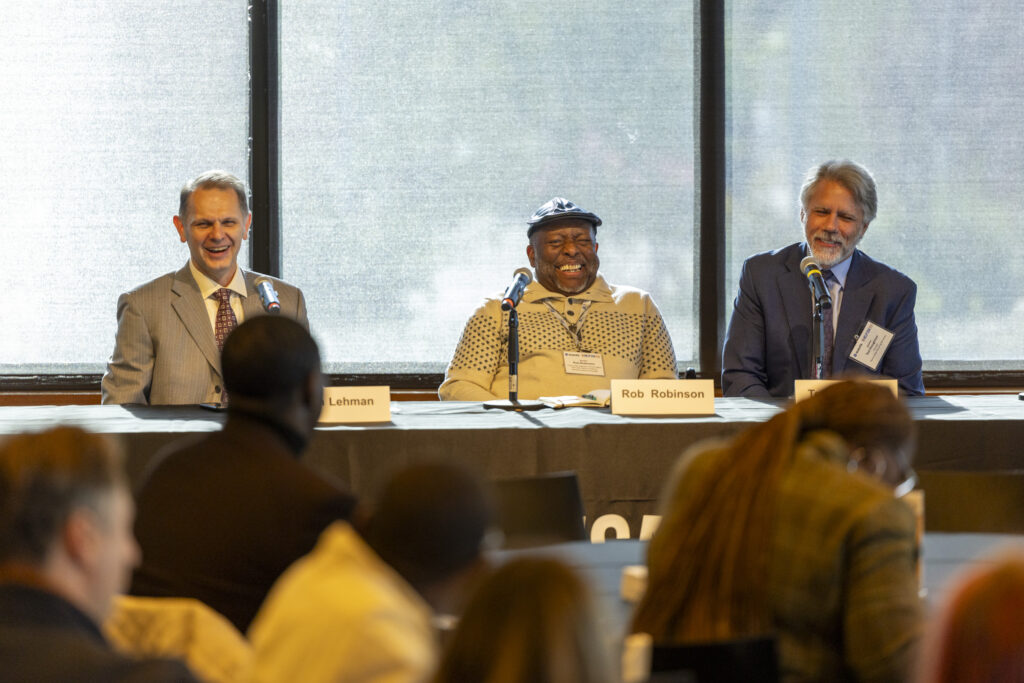
The discussion also featured Rob Robinson, a community organizer and human rights advocate, who drew on his personal experience with homelessness and his work examining international housing policies to challenge New York City’s reliance on traditional shelter approaches.
Ted Houghton, Principal at Terra Linda Housing Services, discussed how New York City’s right-to-shelter obligation can drive funding toward emergency shelter, even when permanent housing with supportive services could provide a more effective solution.
“If people are coming in, you have to find a bed for them that night. And so that becomes the funding priority. … But more often than not, it would have been easier to help people, and they would have done better if they had been able to be placed into housing and gotten those services in housing first,” Houghton said.
Addressing Policy Barriers to Permanent Housing
Despite billions invested in emergency shelter, rental assistance, and affordable housing, the path to permanent housing remains difficult to navigate. The policy panel, From Shelter Obligation to Housing Strategy, examined the housing shortages, administrative barriers, and funding challenges that continue to slow progress.
“At the very macro level, we have a massive supply issue and that tight housing market, it just trickles throughout the entire market. … It’s not a short term thing to build sort of massive amounts of new housing to try to relieve the pressure in the market … But we can take some of that down by focusing on supply,” said RuthAnne Visnauskas, Commissioner and CEO of the NYS Division of Homes & Community Renewal.
Moderated by Rafael E. Cestero, CEO of The Community Preservation Corporation, the discussion also explored how to preserve existing affordable housing, simplify rental assistance, and eliminate delays in housing placements. Carlina Rivera, President and CEO of the New York State Association for Affordable Housing, emphasized the importance of maintaining financially sustainable affordable housing, while Andrea Reid, Executive Deputy Commissioner at the NYC Human Resources Administration, discussed efforts to streamline housing assistance and better connect households with services.
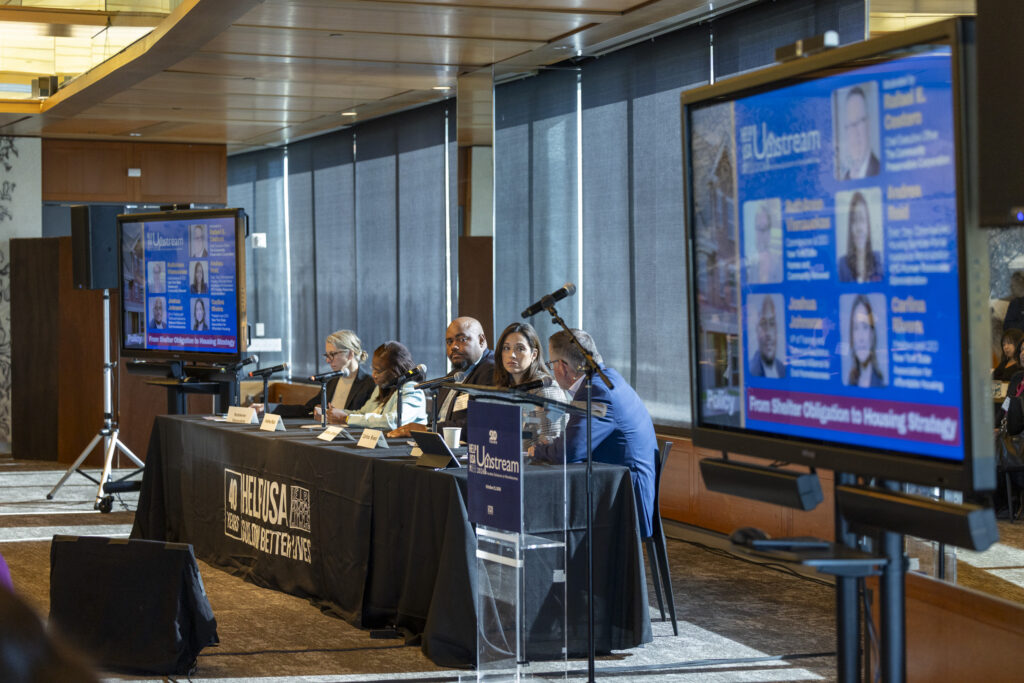
“We’re not going to shelter our way out of homelessness,” said Joshua Johnson, Vice President of Training and Technical Assistance at the National Alliance to End Homelessness. “It has to be thinking about shared housing. It has to be thinking about master leasing, has to be thinking about direct cash transfers. People can be successful if we get out the way. Do we believe in people to be the captains of their ship, or do we believe that they have to follow our paths?”
Connecting Shelter, Housing, and Supportive Services
Securing permanent housing is only part of the challenge. The practice panel, The Missing Path from Crisis to Home, examined how disconnected services, funding structures, and gaps in communication can leave individuals and families struggling to navigate the transition from shelter to long-term housing stability.

Moderated by Baaba Halm, Senior Vice President of Programs at Enterprise Community Partners, the discussion highlighted the need for stronger coordination across housing and service providers. Daniel Farrell, Chief Operating Officer of HELP USA, addressed how disconnected funding streams can prevent programs from delivering continuous support, while Dawn M. Pinnock, President and CEO of the Center for Urban Community Services, called for a shift in performance standards from simply placing people into housing to ensuring they remain stably housed.
“We need a real continuum of care when it comes to housing and services. Right now, we have a system that is really disconnected, disjointed, and the onus and the burden is put on people navigating these systems to not only navigate and advocate for on their own behalf, but to make these systems work together. And that shouldn’t be something that is borne on them,” said Pascale Leone, Executive Director of the Supportive Housing Network of New York.
Offering a firsthand perspective, Peter-Gaye Anderson, a HELP USA resident, emphasized the importance of ongoing guidance, clear communication, and access to resources that support independence.
“I think that supportive housing should be more than providing someone with a place to live. It should be the foundation and resources and encouragement to people who need to become independent to build a better future,” Anderson said.
Using Research and Technology to Strengthen Homelessness Prevention
The symposium’s final panel, What Prevention Data Teaches Us About Keeping People Housed, examined how technology, research, and data can help identify housing instability earlier and connect households with services before homelessness occurs.
HELP USA presented early findings from its Homebase Accelerator, a digital intake and service coordination platform developed with funding from the Citi Foundation through its Global Innovation Challenge.
The platform allows households to begin applications online or through on-site kiosks, supports earlier eligibility screening, and improves communication between applicants and service providers.
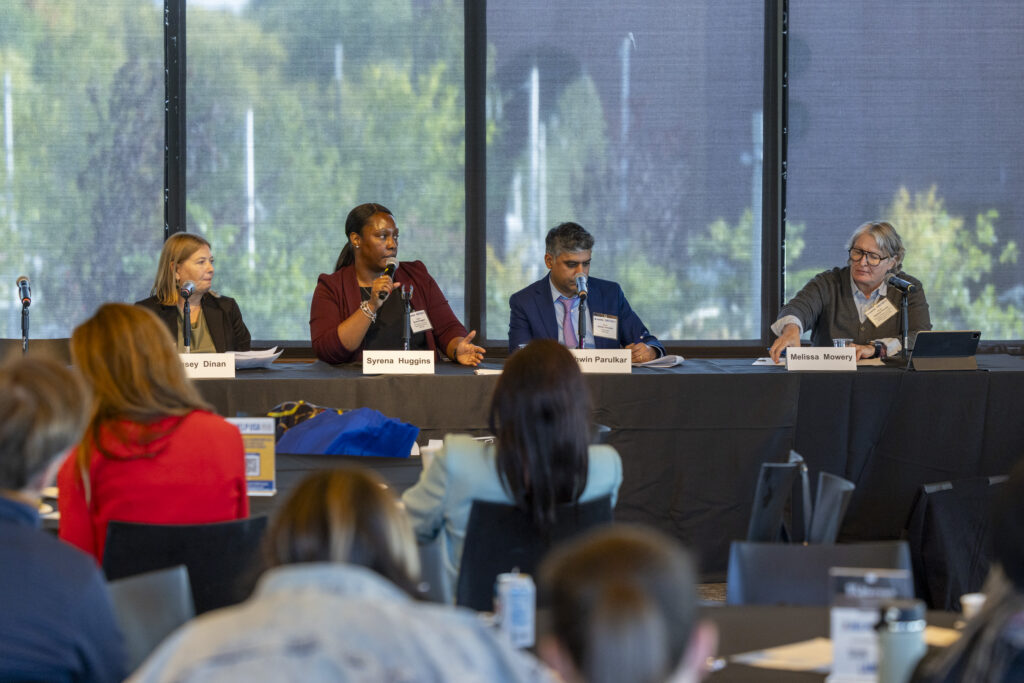
Moderating the discussion, Melissa Mowery, Senior Vice President at CAMBA, emphasized the potential of better information to identify households experiencing housing instability before they enter the shelter system.
“We know that prevention is often framed as keeping people from falling off a cliff,” Mowery said. “But the most useful prevention data goes further. It shows us who’s nearing the edge, why, and what support can help community members stay housed.”
Kinsey Dinan, Deputy Commissioner of the Office of Research and Policy Innovation at the NYC Department of Social Services, provided a citywide perspective on the factors driving homelessness. She highlighted how many individuals and families entering shelter come from unstable, doubled-up living arrangements, underscoring the importance of identifying housing instability earlier and helping households remain housed
Syrena Huggins, Associate Vice President of Homeless Prevention and Rapid Rehousing Services at HELP USA, described how increasing demand for Homebase services had created significant operational challenges, including long waits for appointments and delays in accessing assistance.
“With this database that we built from the ground up, we have seen a significant change in terms of the wait time for an individual applying for Homebase and getting to the point of an appointment meeting with an intake worker,” Huggins said.
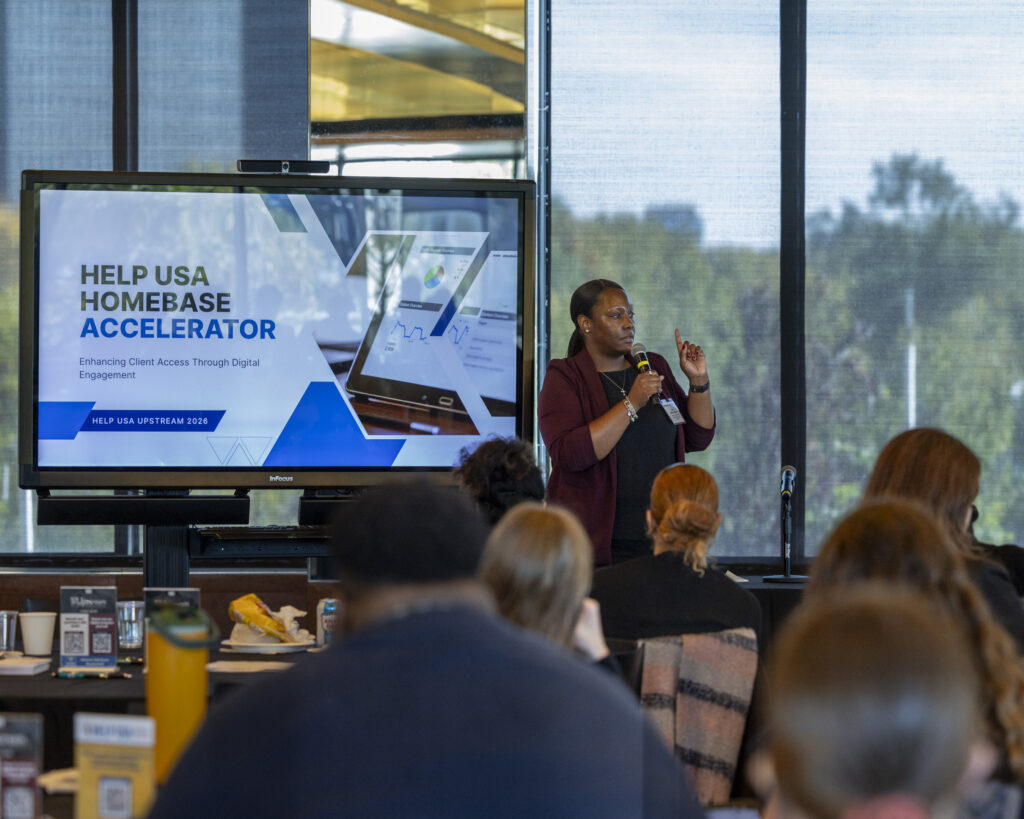
She also emphasized that the innovation is intended to help meet a larger need for homelessness prevention services and could provide lessons for other Homebase providers facing similar challenges.
Ashwin Parulkar, Associate Vice President of Research at HELP USA, presented initial operational findings from the platform’s implementation between July 1 and October 13, 2026.
“What the initial findings is showing us is that the accelerator is essentially getting to the right people faster by identifying eligible clients and prioritizing the highest risk ones,” Parulkar said.
Among the early results presented:
- Eligibility determination times decreased from two to three months to three days or less.
- Average time spent on-site decreased from two to three hours to 52 minutes.
- 31% of applications were submitted online, while 69% were submitted through on-site kiosks.
These findings reflect approximately three and a half months of implementation. Continued evaluation will be necessary to determine how the operational improvements affect longer-term homelessness prevention outcomes.
Moving from Discussion to Action
Throughout the symposium, speakers emphasized that reducing homelessness will require more than expanding emergency shelter capacity. Discussions highlighted the need for greater affordable housing availability, streamlined housing assistance, coordinated services, and policies that support long-term housing stability.
In his closing remarks, Lehman called on participants to build on the ideas presented throughout the day and continue identifying opportunities for change.
“Let’s push the boundaries on what we learned, and let’s be willing to try new things. Let’s not just be satisfied with what we’ve been doing. Let’s be thinking about what can we do that’s different and better,” Lehman said.
Upstream 2026 was made possible with the support of Broadway Builders, Graham Company, and Lamb Insurance Services, which also sponsored the symposium’s lunch.